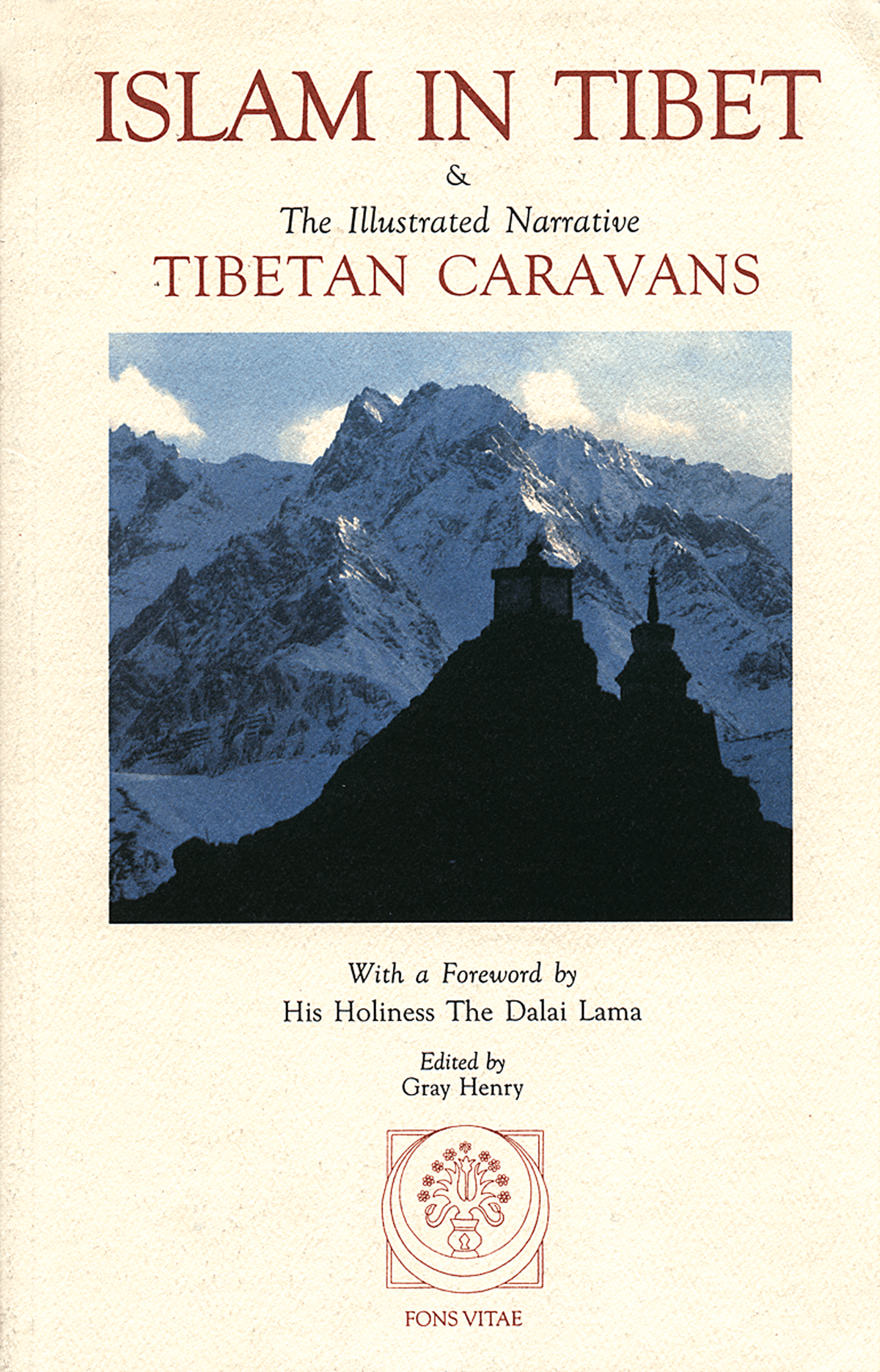
Product Description This book Tibetan Caravan gives a vivid account of life in the Land of Snow from the perspective of a Tibetan Muslim. As this story shows, when we were free, we all lived together like members of the same family. We worked together, underwent hardship together and ate and drank together. Many of us too have since experienced the ups and downs of life as refugees together. What we look forward to as Tibetans, whatever our religion, is living together once more in friendship and harmony in a peaceful, free Tibet. – The Dalai Lama, May 10,1996, from the Foreward of the book. “A great disservice was done to the relations between Buddhism and Islam by the error Western scholars made in the 19th century when they misinterpreted Buddhism as being atheism. Buddha not only believed in God, he knew God. There were numerous atheists in Buddha’s time — the Charvaka materialists — and the Buddha specifically critiqued their lack of belief in any spiritual reality. The God of Abraham insisted that He, YAHWEH, was inconceivable by human minds. Therefore, the proper response of humans before this inconceivability is Islam, i.e. surrender of mind as well as body. Buddhism is likewise based on the transcendence of self-centeredness, on surrender of self-aggrandizing energies released by the surrender of selflessness. Thus, for both Buddhism and Islam, love and mercy, the energies released by the surrender of selfishness, are the supreme energies of the universe, all good, all creative, all wise, all trustworthy. The true Buddhist and the true Muslim should embrace once and for all. Let them only be intolerant of intolerance, in the name of their own or any other’s religion. Let religion never again be a cause of harm to beings. Let it only be the road to the inconceivable sea of bliss for all!” —Professor Robert F. Thurman, Director of Religion, Columbia University Reviews This unique account provides us not only with a taste of traditional human life before the incursions of the modern world, but also enters us into a first-hand experience of life within a totally sacred society. What is most precious is that we see this through the lens of Abdul Wahid Radhu - a man of great spiritual depth who had a direct knowledge of Sufism. We come to see that special place where those participating in the spiritual life of two very different traditions recognize one another at a level behind external forms. Radhu’s relationship with the Dalai Lama’s family is described, as well as the arrival of the Chinese and his own escape. He was privy to the plans made for the Dalai Lama’s departure through his friendship with His Holiness’ brother. We also see Henrich Harrer’s life from an additional perspective. "On the significant (but little recognized) presence of Islam in Tibet, this is the best book that has appeared." Huston Smith, Author of The World’s Religions "Traditional Tibetan life was a rich tapestry woven of several strands, of which one was Islam. This is the first work in the English language to make this as yet little recognized aspect of Tibetan culture and society known through a narrative that rings with the highest degree of authenticity and is, at the same time, of great general appeal. This work is also a stark reminder of how religions as diverse as Islam and Buddhism lived in peace at the matrix of a traditional society such as that of Tibet." Seyyed Hossein Nasr, George Washington University