$19.76
$31.21
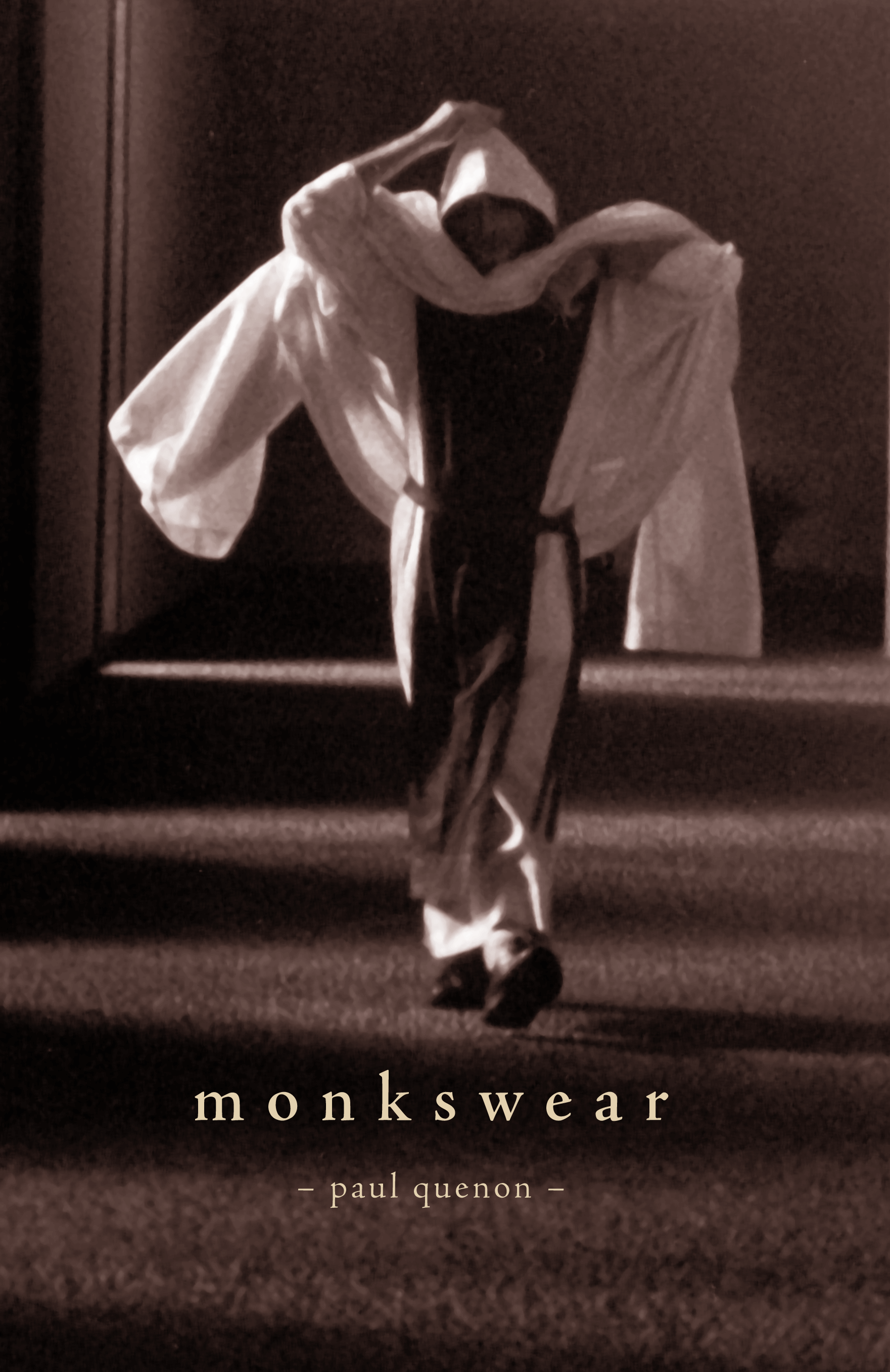
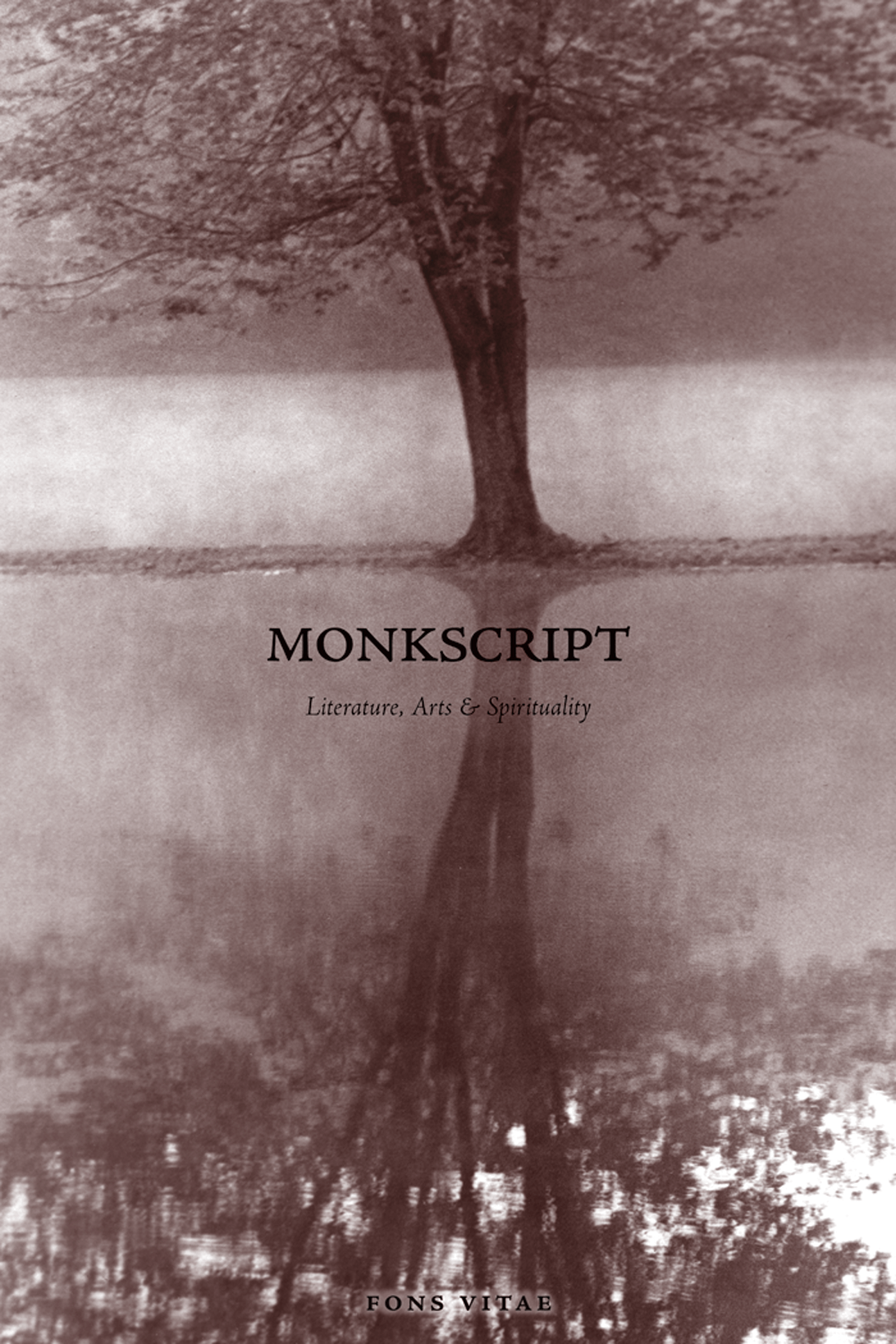
Product Description “Brother Paul Quenon, who entered the monastery when he was 17 and who was a novice under Thomas Merton, always sleeps outside with the “open sky as (his) dormitory,” where a hay-bale prevents winter snow drifts from covering him. He knows the night sky, like native peoples in all lands and times, and the birds know him! In these un-busy surroundings he is free to notice, clear to reflect. And through his honest observations, we come to visit the stark details of the monastic life, now forever imprinted as our image of what that life must be, not at all what we though it was. ‘Every word and event a disguise of the unpronounceable.’ “Sometimes we laugh out loud, as when he describes the deep pockets of his habit- so deep he must lean over to reach his keys, dental floss, notebook or glasses, but deep enough, he notes, to conceal two bottles of wine! “We visit the treasure of his nothingness, his emptiness and learn that even his humble ‘monkswear’ hanging on nameless numbered pegs, is not his own. And that he sometimes nearly sleeps while saying his rosary, but touch remains. “The straw mattress, with lumps and an imprint from a previous monk must, in time, be re-imprinted with the shape of his own body…which soon too will be buried ‘without a coffin or a vault to keep out the rain and other earthly visitors’. “But the exhilaration remains. – Fenton Johnson Author, Keeping Faith: A Skeptic’s Journey Among Christian and Buddhist Monks The Monastic Mystery Chris McDonnell CT June 18 th 2021. There are numerous ways of living the Christian life and each of us is called to a particular way. For many the route is not clear at the outset, we test and try a number of options seeking a road map for our journey encountering choices that often end in cul- de-sacs and so we are forced to start again. In the early days of the Church that was a problem that faced every disciple of the Risen Nazarene, how to follow in his footsteps, how to be faithful to his teaching. Gradually, over time, paths became familiar and traditions were established. Communities of Christians became settled in towns and cities, sharing with one another what they had and coming together in the Eucharistic gift. But still there was work to be done, a wage to be earned and families to care for in a busy and, at times, harsh world. A few chose an alternate path, they chose the solitude of the desert where they lived in very small communities or as hermits, devoting their time to a single-minded pursuit of faith in the Lord. We now know them as the Desert Fathers and recognize the lives they lived as the birth of Christian monasticism. Over a period of a few hundred years these communities flourished and grew as their pattern of life became established. They lived a simple life centred on prayer. It was an ordered life, lived according to a code of practices or rules. The most significant of these Rules we owe to Benedict of Nursia whose name is associated with one of the great monastic orders of the Church, the Benedictines. For many of us, the monastery is an historic pile of stones, the left over ruins from the European Reformation. Yet even these edifices have their own majesty. However a monastery is not just a building, it is the life that is lived within it, the people who walk its passageways and live in its rooms, whose work on a farm or in a workshop enables them to live a life of prayer, day in, day out. People give the stones and mortar their vitality and purpose. The era of the great abbeys of Europe may be over but the monastic life remains. Communities of monks and nuns are smaller now, their homes are not in the style of bygone years, they support themselves in different ways, through writing or iconography, cheese making or brewing beer. But still they are centred on prayer offered in an ordered and regular manner. One monastery in the US has become famous through the life and writings of one of its mid-20 th Century monks, Thomas Merton, who entered the Abbey of Gethsemani, Kentucky, in December 1941 and who died to the day, twenty seven years later, in December 1968, in Asia. During his years as a monk of Gethsemani, he taught in the Noviciate, exploring with young men the essence of a monastic vocation in the Cistercian tradition. One of those men who arrived in 1958 was Paul Quenon; he still lives there, 63 years later. Brother Paul is a creative man, a published poet and an accomplished photographer. One of his Collections, Monkswear, first published in 2008, offers a perceptive insight to the monastic life, its theme centred round the aspects of the simple clothing or habit that is worn by the monks. I would like to share with you some of Paul’s poems for they tell us much about the life of a monk, rooted in the past, yet alive in our own time. The Collection is illustrated with Paul’s own photography with the startling image that heads this article providing the cover to his book. One item of clothing is the scapular, a long piece of black cloth, worn over the shoulders and hanging down back and front. He describes it in a few succinct words, Scapulars White robe Black stripe: Monks White fur Black stripe: Skunks From both Best to keep Your distance. A play on words that is both factual yet full of humour. There is indeed here the expression of good natured banter within the serious intent of a monks vocation. In a poem ‘Possessed by a Habit’ he describes his monastic life. It gives the title to his Collection. Sorry, but I can’t seem to shed this habit I’m so given over to, this monkswear, this second skin I’m so habituated to. I’ve worn it till the habit has worn me quite down to a shadow of the man I once was. You would hardly recognize the boy who at least had some promise and risked talents, life and opportunities for the sake of a possessive, chronic habit which he won’t shake off, that holds him so hide-bound he has all but lost everything which seems to be the way he wants it given the merry way he carries on with no thought of past, future, or of what might become of him once he wakes up and finds himself without means or ability so sustain so religiously his mystifying habit! Just you see-unless he quits this habit it will eventually carry him to the grave. Amen, Alleluia! This is a beautiful, well crafted statement of the simplicity of his vocational life. The collection concludes with a few lines on the Cowl -solemn as chant one sweep of fabric from head to foot. cowls hanging on a row of pegs- tall disembodied spirits holding shadows deep in the folds waiting for light for light to shift waiting for a bell for the reach of my hand to spread out the slow wings, release the shadows and envelope my prayer-hungry body with light. Sprinkled through these pages are many aspects of monastic life, some trivial, others significant. One, a brief seven lines, is entitled ‘Weird Arithmetic’ The middle cipher in the word God is zero. In the word good stands zero x zero naught times naught equals all nothings lodged in God’s open heart. In a piece entitled The Laundry Number he describes the numbered identity of each monk. -patched inside the black collar of each cowl and scapular is a designated number to sort out in the wash whose is which and what goes where. Above each patch is a loop that hangs on a peg- a hanging cipher for an unnamed person who wears thin, wears habitually the same habit over and over and owns not a stitch, not a loop, not a number, owns not his very own body even even as he is a God-owned body in a God-owned garb which hangs on a loop in a row of pegs a voiceless choir answering each to that high Ledger where after the great wash and agitation the heat and pressure that Searching Hand will then sort out who is who and who belongs where and will lift up and carefully place each one onto his own designated peg. Paul’s work is a deep mine of thoughtful reflection, the fruit of many years spent living his monastic life. In this collection of fifty poems and a number of photographic images, he offers us an opportunity of insight to a different place beyond our immediate experience. It is a privilege to share it with him. Paul Quenon’s Collection ‘Monkswear’ is published by Fons Vitae Louisville KY. ISBN 1-891785-15-X. It is well worth reading. Reviews “Paul Quenon writes with a precise vision that engages the reader, and opens up the interior world in such a way that it can't help but blossom in the mind and heart of any reader. He is a remarkable talent!” — Marty Gervais, Editor of Black Moss Press, Ontario “Paul Quenon’s unique monastic voice resonates with insight and beauty. He celebrates the habitual graces and over-looked miracles of a decidedly human and sensitive monk’s daily calendar. Full of vitality and good humor, Quenon communicates to our own quotidian lives his monk’s brand of fresh air.” - Jonathan Montaldo, the Merton Institute for Contemplative Living
Thomas Merton And The Monastery Of Gesthemani